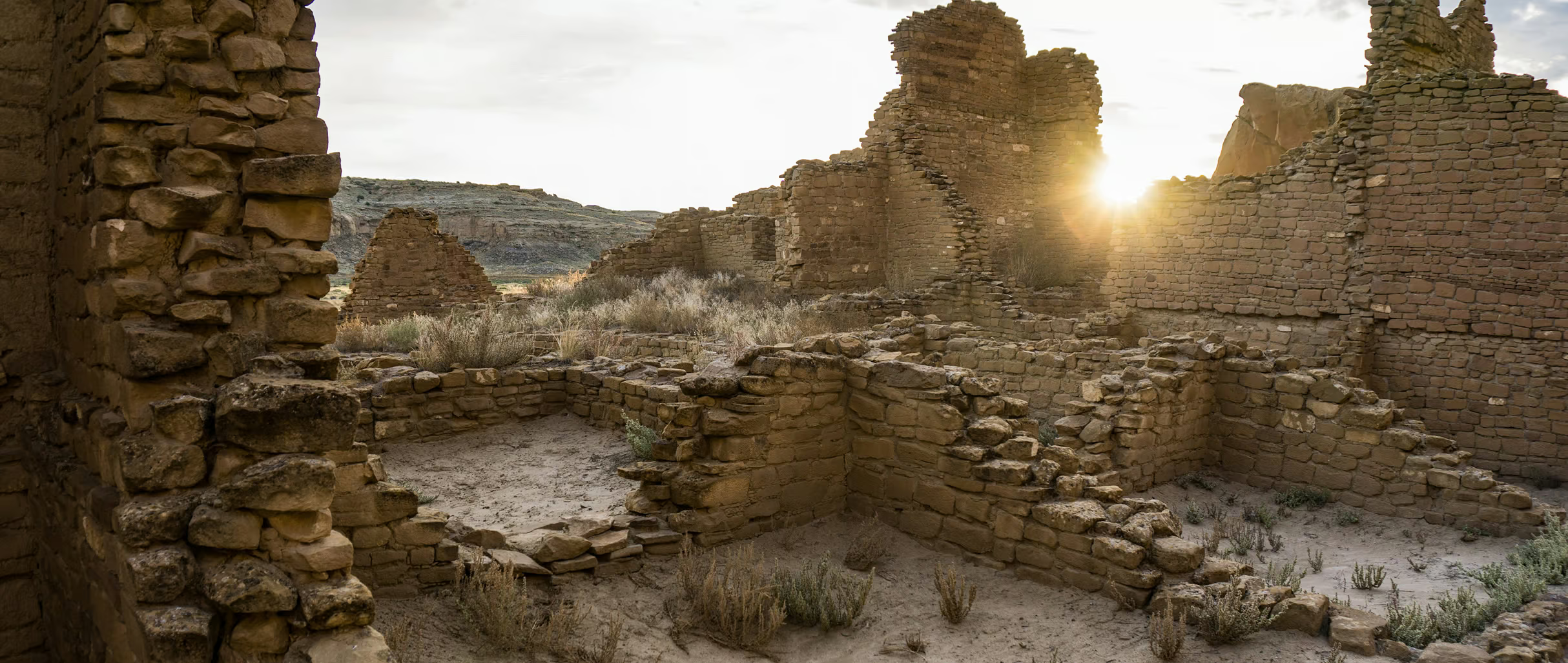
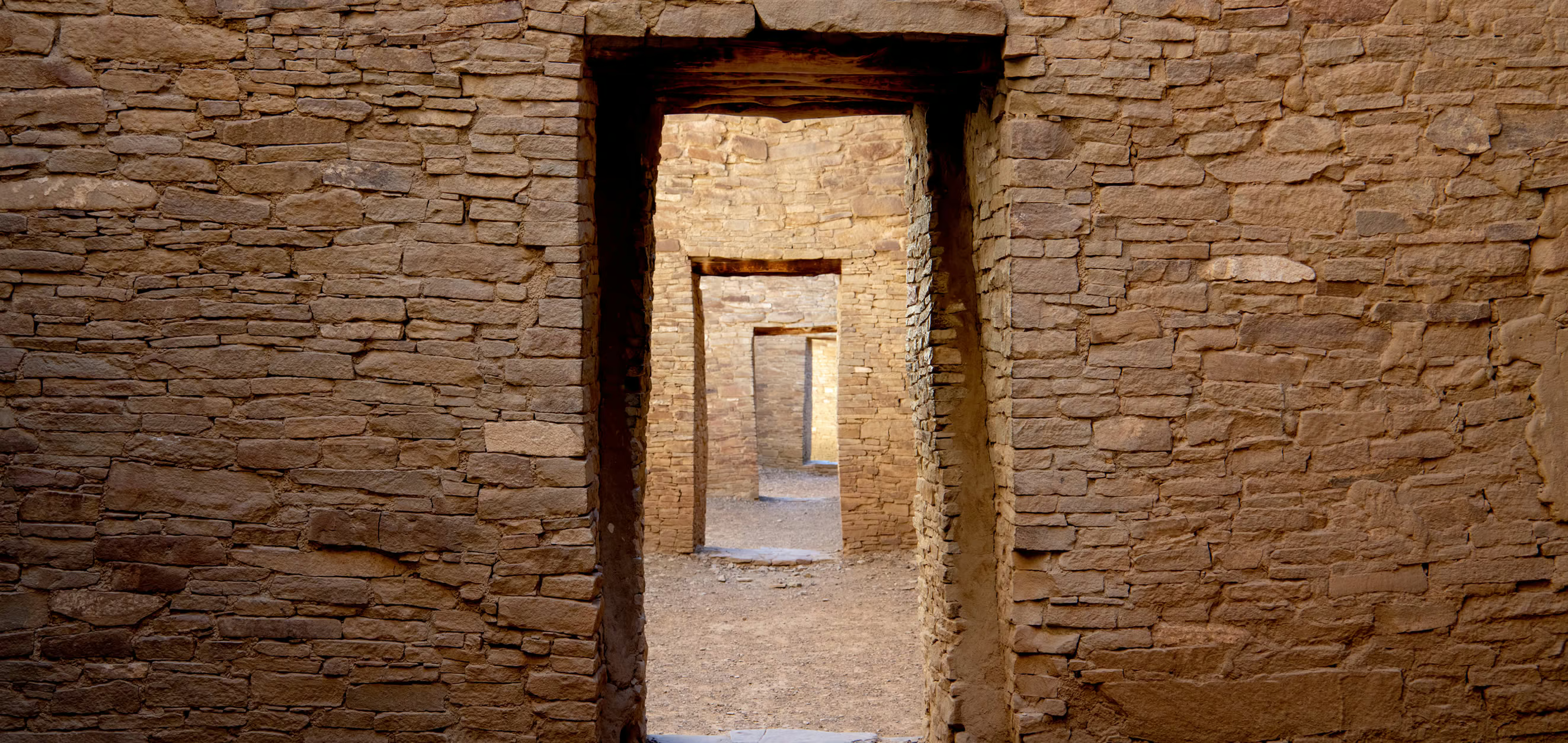
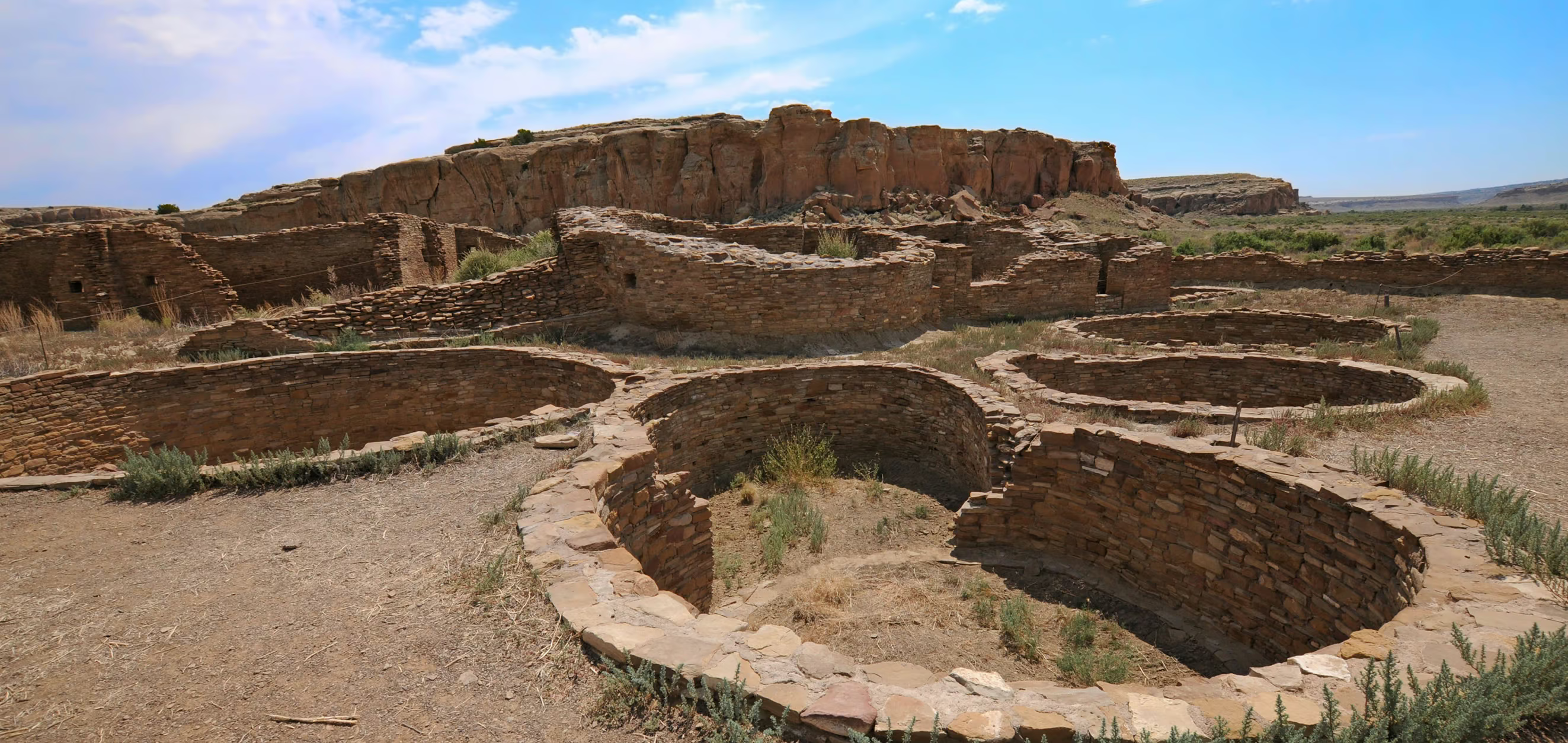
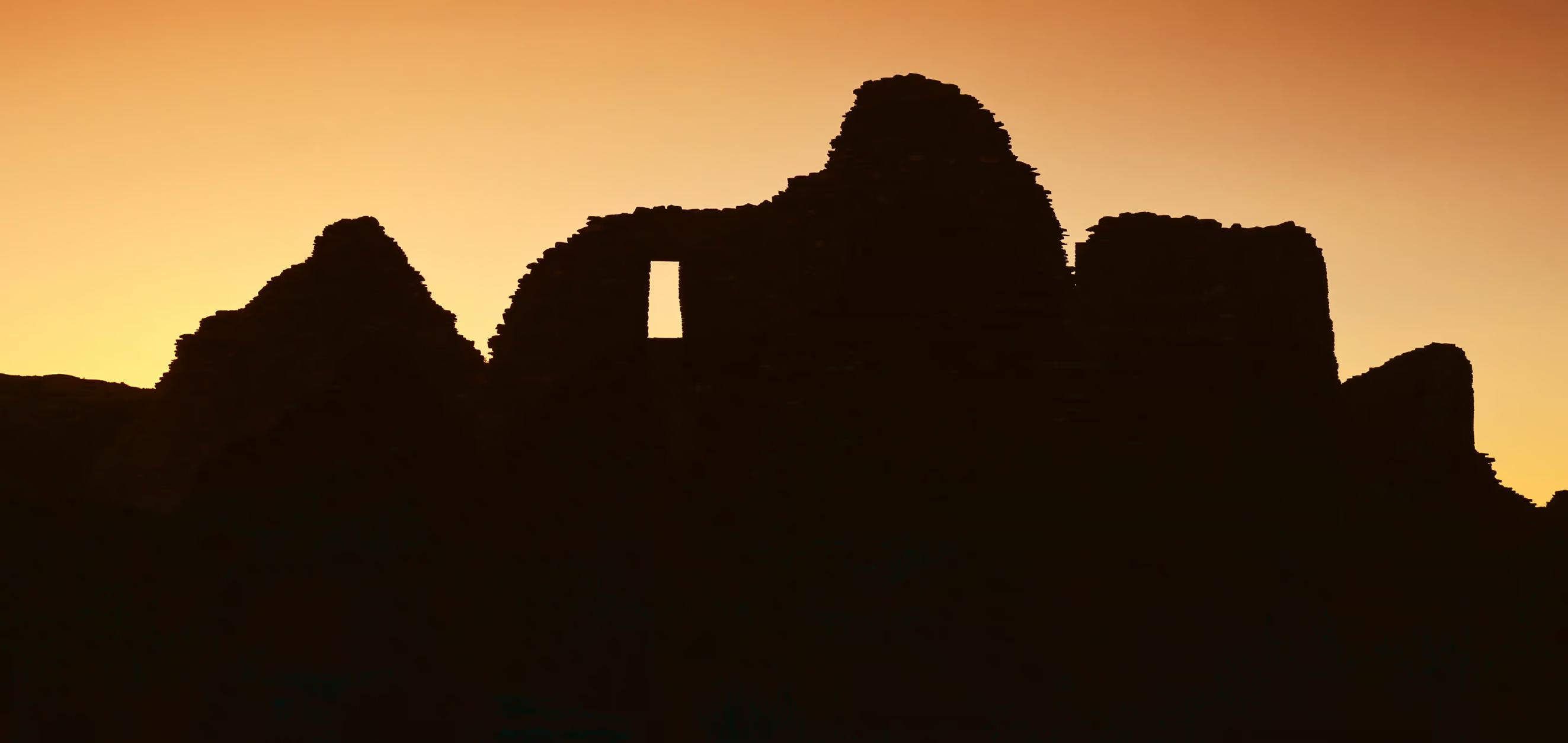
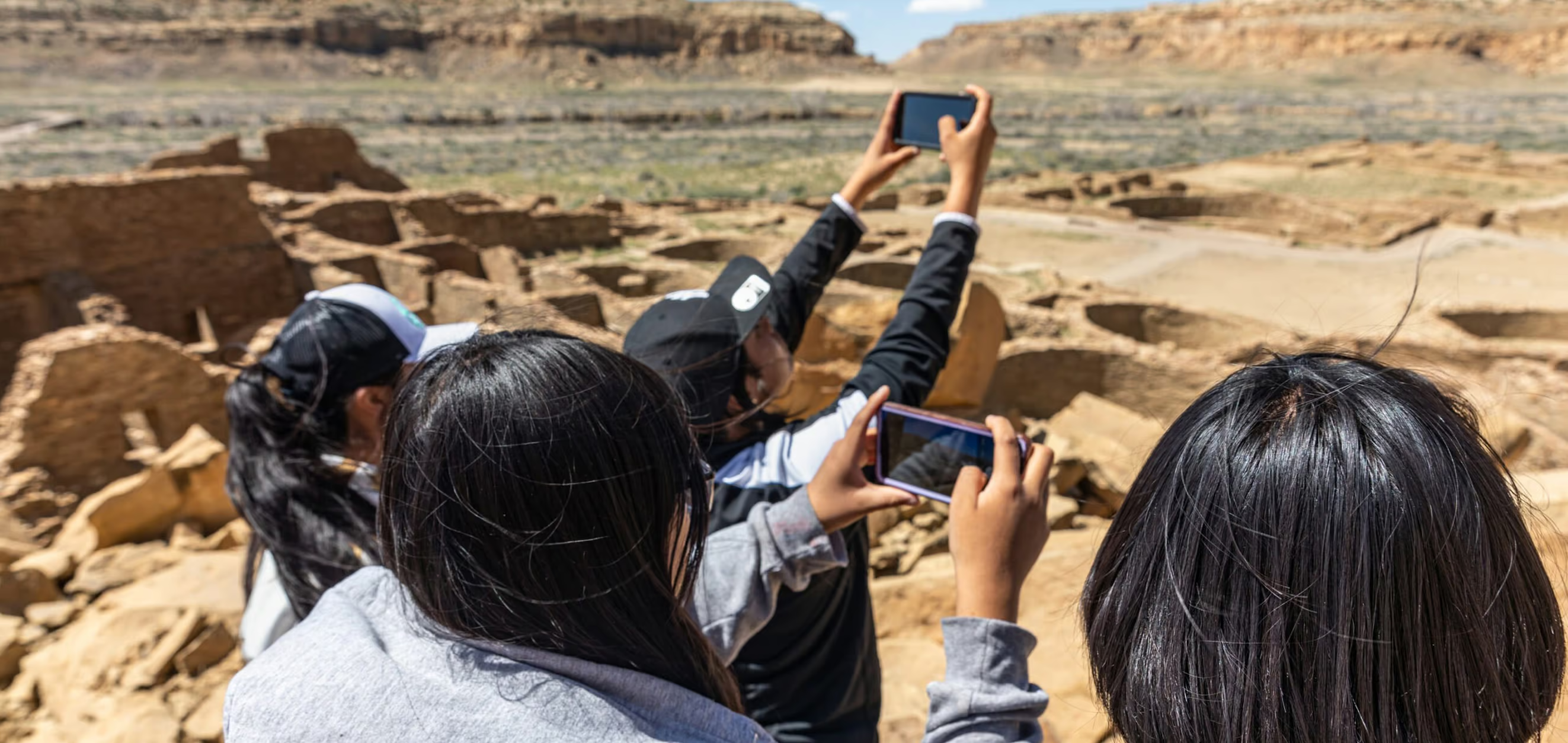
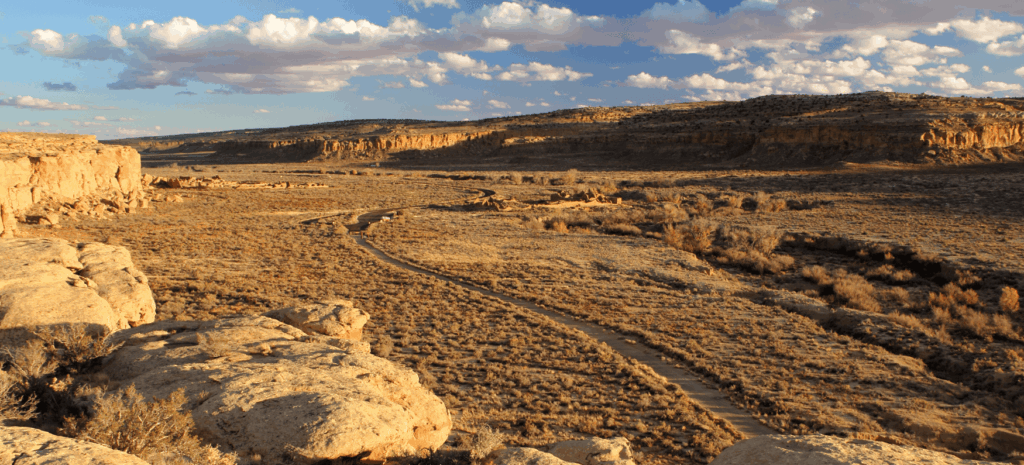
In the remote high desert of northwestern New Mexico, Chaco Canyon was the heart of the ancient Chacoan culture, and today it is considered an important prehistoric landscape of North America. It’s a protected UNESCO World Heritage Site and living cultural landscape for modern-day Pueblo peoples and tribes that combines rich history and spiritual significance with natural systems and vast, dark night skies.
Despite its cultural and ecological value, the Greater Chaco region faces pressure from oil and gas development within the San Juan Basin. Recent proposals would remove the 20-year ban on new oil and gas drilling on over 336,000 acres of public lands within the Greater Chaco landscape. These industrial activities risk disrupting archaeological sites, fragmenting wildlife habitat, degrading air and night-sky quality, impacting community health, and jeopardizing the cultural ties between Indigenous peoples and this unique landscape.